Should Consultants Charge an Upfront Fee or Charge at the End of a Project?

This is an answer to a question I was posed on Quora.

I’d avoid collecting money entirely (i.e., 100%) on the backend except for the shortest and smallest engagements.

Here’s one anecdotal story: I once managed a business advisory practice as part of a large, international and diversified products and services firm. To get this practice off the ground we subcontracted to a number of consulting firms to fill in for delivery gaps we had. And some of these firms didn’t collect their fees that regularly since we were a massive firm with worldwide recognition and history. We always paid our bills, no problem. However as additional context below the surface, the company I worked for apparently had a variety of issues, in particular high levels of debt caused by years of merger and acquisition activity. The CEO had hired one of the big MBB firms are part of efforts to turn our company around.

One day the CEO announces that the company would proactively declare Chapter 11 bankruptcy even though we had cash and lots of assets. What did that mean? The consulting companies that I used as subcontractors could not be paid. The telephone calls I had to make hurt to make. At the time that damaged my reputation even though the whole situation was something that occurred at a much higher level. I do wonder what happened to the fees that were owed to the MBB firm that was helping at the strategic level. Were these paid off before the bankruptcy? Or did they get in line like I had to waiting for my severance pay to make it through the the courts? I have a bad taste in my mouth after that whole experience, especially since the CEO got a parachute whereas suppliers and trench workers comparatively did not.

There are many other examples that I could come up with. However, consulting firms have cash flow considerations to make. And they take some risks, so it is quite fair to pay consultants up-front or along the way in a timely manner. Things can happen that slow things up. For example, if you are doing business internationally, the client may need to do tedious checks on corruption and money laundering that can take time for larger deals but they may be able to release some money up-front to cover the consulting firm services being floated. Or other (probably rare) things can cause complete train wrecks such as working with a distressed firm that might declare bankruptcy out of the blue.

So as a consultant perhaps I have some baggage, but I’d avoid opting for the “complete payment after you’re done” option unless you acknowledge, however remote, the risks, uncertainty, and potential unknown unknowns that there are.
Reflections on My Roles and Purposes as a Teacher (A Personal Manifesto)

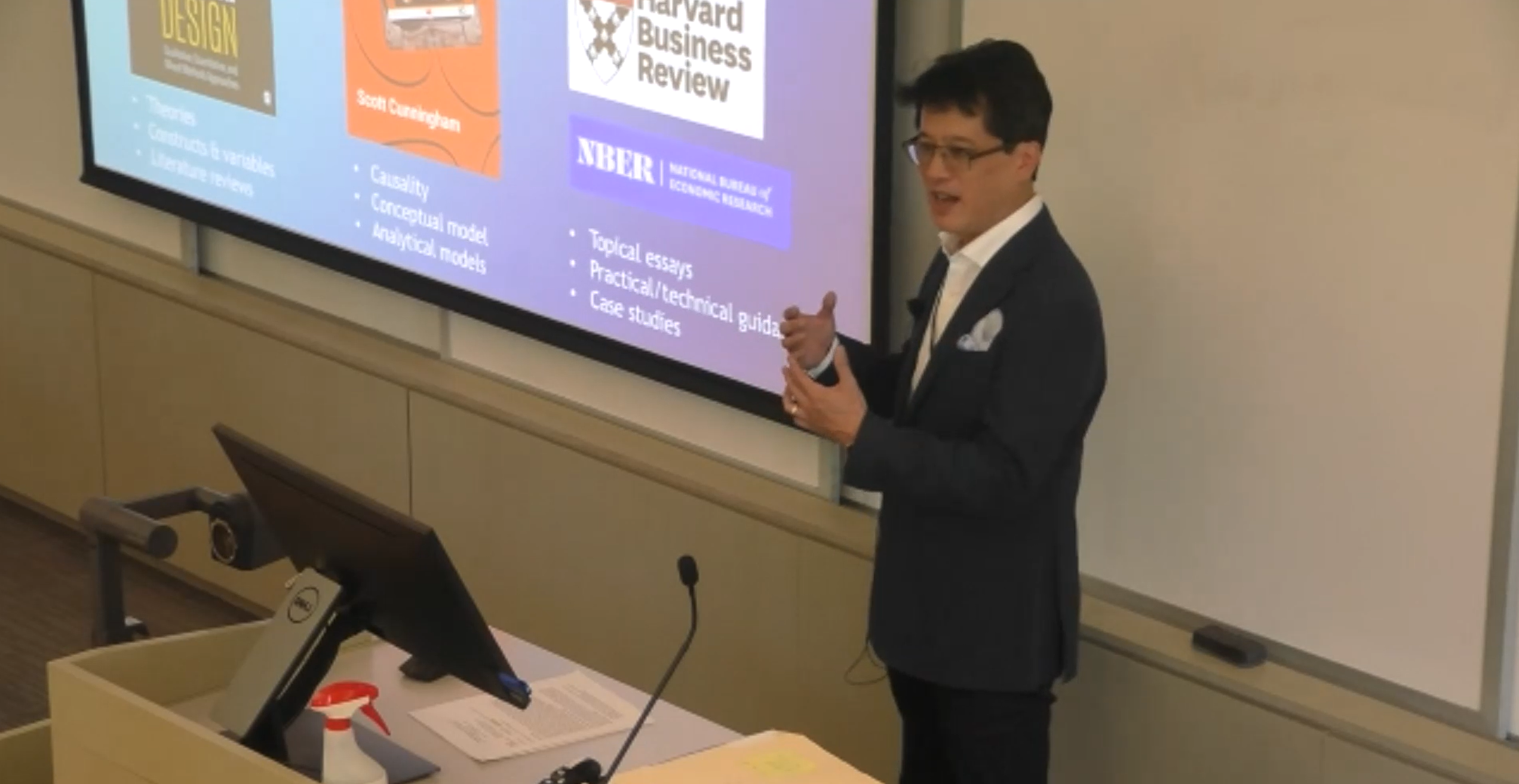
As we prepare to head into the 2022 fall semester at Cornell, I wanted to jot down some key thoughts on my roles and purposes as a teacher.

  • I care about my students and want to help them to learn something, go as far as they they are willing and able to go my classes, and be better prepared to achieve their goals in life.
  • While I have training as an academic and respect and nurture those skills, given that most of my students will be on professionally-destined tracks post-Cornell, I hope to bring to bear my experiences and insights from working for many years in the commercial world. In my past classes, students have told me that this is one of my big differentiators as a professor.
  • Being part of a university requires me to grade students. Admittedly, this process makes me uncomfortable. Comfort and grades aside, I will try to provide students with as much feedback, support, and encouragement as my role will allow me to do.
  • While I know a good deal about some things, I don’t know everything. In fact, I know close to nothing about many things. I have limits, and when I run into them, I will try to leverage my resourcefulness to try to point you in the right direction.
  • We will learn things together. I will learn from you, and I hope you will learn some from me, the other instructors, teaching assistants, and your classmates. We have a connection as aspiring people and through Cornell. Let’s make the most of our limited time together, through the good and the bad.
  • The fall is upon us, and I am ready to be on “team you”.

Case Examples of Empirical Research Methods As Related to Consulting Firms

Since many of my students aspire to work in consulting after they graduate, the purpose of this post is to round up some examples in the consulting space as related to research methods. This post will be updated from time to time.

Great Resource for Research Seminar Students on Statistical Power Simulations Using R

In the past, I have used power calculators like GPower for straightforward research designs, but I have never really found a good, practical resource on executing the mechanics of power simulations, especially when research designs and analytical frameworks are more complex. This great article provides a framework (with R code) to execute power simulations and may be useful to students in Research Seminar (AEM 6991). https://cameronraymond.me/blog/power-simulations-in-r/ . There is also a GitHub posting at https://github.com/cameron-raymond/power-simulation-tutorial.

Potential Student Resources for Data Scraping

Here are a few resources that students may find useful for research seminar projects that involve data scraping. This list of resources may be updated from time to time:

Good Papers on Machine Learning and Economics

Here are some overview papers that may be of interest to people that are learning about ties between machine learning and economics. Admittedly, it helps to have some formal background on causal inference to read these papers.

For more background on causal inference, I highly recommend the book by Scott Cunningham, Causal Inference.

If You Don’t Like Case Competitions, Does This Mean You Won’t Like or Be Good at Consulting?

I was posed on Quora a question similar to the above question, and below was my response. I highlight in bold, a key insight drawn from behavioral science.

One the one hand, case competitions leverage a lot of skills that career consultants end up using, such as problem solving skills under pressure, teamwork, communications, creativity, and persuasiveness. But there are also many other skills to master in consulting which are not part of case competitions such as street smarts, empathy, functional excellence, engagement management, leadership, industry knowledge, and advisory orientation. In consulting, you serve your client, not case competition evaluation boards.

Recognize that at the core of consuting is mentorship, apprenticeship, teamwork, and learning from experience. Namely, people learn how to become better and better consultants by starting the profession with enough core skills and appetities to get started. After being involved with a number of projects, one learns from others in the firm how to develop more and more skills and one’s professional identity. You may start in one place and find yourself in a very different place at a later point. Of course, the flavor of the firm and how you experience this may vary a lot from firm to firm.

I wouldn’t overindex and project too far into your future how much you would like consulting based on a single indicator. People are not that great at forecasting in complex situations where they have little prior experience and little feedback. On the other hand, if you are getting multiple warning signs, such as you dislike teamwork, dislike 99% of the people in consulting, have gotten feedback from other consultants that you are the wrong for the profession, have gotten feedback from people that know you well and know the profession that you are not a fit, dislike business, dislike companies, dislike people, then I might reflect a bit more. Remember, you might just start consulting with a strong skills and proclivities in a few areas and flourish over time. My keys to success in consulting (as evidenced solely by my ability to stay in the profession for decades) were probably my appetite for variety and my ability to adapt. I also had supportive managers at key pivot points in my career.

Recent article: “The effectiveness of nudging: A meta-analysis of choice architecture interventions across behavioral domains”

In one of my prior Applied Behavioral Economics lectures, I mentioned the notion of not only looking at individual studies but also finding meta studies (essentially studies of studies) to help inform behavioral perspectives. This article covers a meta study of behavioral architecture interventions: https://www.pnas.org/content/119/1/e2107346118 

In this article, there were two observations that really stuck out to me:

1) Considering a range of domains (health, food, environment, finance, prosocial) where behavioral architecture is applied, there is the highest effect on food choices and lowest effects in the financial domain; effects are potentially moderated by domain because of lower behavioral costs and lower perceived consequences in the former versus higher behavioral costs and higher perceived consequences in the latter. 

2) Decision structure changes (choice architecture) outperforms decision information (information architecture) and decision assistance approaches, potentially because choice architecture approaches require less demand on cognitive information processing, and there is low susceptibility to individual differences and goals. (But remember that we will start to address personalization and individual differences in upcoming classes).

If you are interested in learning more about meta studies and how to do them, I highly recommend the book: Borenstein, Michael, et al. Introduction to meta-analysis. https://www.amazon.com/gp/product/0470057246/ref=dbs_a_def_rwt_bibl_vppi_i2